How Many Portions Per Hour Can a Soft Serve Machine Make?

A standard commercial soft serve machine typically dispenses between 200 to 450 portions per hour , depending on the model and pump type. High-capacity gravity-fed machines produce around 200–300 cones, while pressurized pump models can exceed 400 servings per hour to meet peak demand during busy events.
Understanding the capacity of your equipment is the foundation of any successful ice cream operation. Whether you are running a storefront in St. Augustine or a mobile truck mission across Northeast Florida, the ability to serve customers quickly is the difference between a high-profit afternoon and a long line of frustrated patrons. When we talk about "portions per hour," we are measuring the machine’s ability to freeze a liquid mix into a creamy, solid state consistently over a 60-minute window. This involves a complex interplay of refrigeration, motor power, and airflow. For business owners, knowing these numbers allows for better scheduling, more accurate catering quotes, and a smoother flow during Northeast Florida's hottest summer days.
How Many Cones Can an Ice Cream Machine Make in One Hour?
The answer varies significantly based on the tier of the machine. Commercial soft serve machines are generally categorized into three levels of production: low, medium, and high volume. To choose the right one, you must understand your projected foot traffic and peak-hour demands.
- Low-Volume Machines (Entry Level): These are often countertop models designed for small cafes or breakrooms. They typically produce 100 to 150 four-ounce portions per hour. They are ideal for businesses where ice cream is a secondary menu item rather than the main attraction.
- Medium-Volume Machines (Mid-Range): Most standard menu service operations utilize these. They can handle 200 to 300 portions per hour. They are reliable for consistent all-day service but may struggle during a sudden rush of 50 people arriving at once.
- High-Volume Machines (Professional Grade): These are the workhorses of the industry, often found in high-traffic trucks and dedicated ice cream parlors. These machines dispense 350 to 500+ portions per hour and feature faster recovery times to keep the product at the perfect temperature.
It is important to note that these manufacturer ratings are often based on ideal laboratory conditions. In the real world, factors like ambient room temperature, the starting temperature of your liquid mix, and the skill of the operator will impact the actual output. For those operating in Jacksonville & Duval County , where high humidity can affect cooling systems, you might find that a machine rated for 400 cones actually settles closer to 350 in the peak of July.
Core Components Defining Output Capacity
The throughput is not just about the size of the machine; it is about the efficiency of its internal systems. Several key components work in tandem to determine how fast that delicious soft serve can be dispensed.
- Freezing Cylinder Size: The cylinder is where the magic happens. A larger cylinder holds more ready-to-serve product, allowing for a higher initial burst of servings before the machine needs to "re-freeze" new mix.
- Compressor Horsepower: The compressor is the heart of the refrigeration system. A higher horsepower compressor can remove heat from the mix faster, shortening the recovery time between servings.
- Beater Motor Power: The motor turns the beater inside the cylinder. It must be strong enough to churn through increasingly thick, frozen product without slowing down or overheating.
- Hopper Capacity: While the hopper (where the liquid mix sits) doesn't dictate freezing speed, a larger hopper means fewer refills, allowing the operator to focus on serving rather than maintenance.
- Condenser Efficiency: Whether air-cooled or water-cooled, the condenser must effectively expel heat. If the heat stays in the machine, the freezing process slows to a crawl.
In our journey at Mister Softee Northeast Florida, we’ve learned that maintaining these components is vital. A dirty condenser filter can reduce your portions per hour by 20% or more, simply because the machine cannot breathe. Regular cleaning and part replacement ensure that when you're at a St. Augustine & St. Johns County event, your equipment is running at peak capacity.
How Does a Pump System Increase Servings?
One of the biggest distinctions in commercial soft serve machines is the delivery method: Gravity-fed versus Pump-fed. If your goal is the highest possible volume, the pump system is usually the superior choice.
In a gravity-fed machine, the liquid mix simply flows from the hopper into the freezing cylinder by the force of gravity. These machines are simpler to clean and often more affordable. However, they are generally slower because the mix enters the cylinder at a slower, less controlled rate. This often limits their hourly output to the lower or middle range of the spectrum.
On the other hand, pump-fed machines (also known as pressurized machines) use a mechanical pump to force the mix and a precise amount of air into the freezing cylinder. This provides several advantages for high-volume service:
- Consistent Texture: The pressure ensures the product is always the same density, regardless of how fast you are pulling the handle.
- Increased Speed: The pump can move product through the system faster than gravity alone, allowing for quicker refills of the freezing cylinder.
- Higher Output: Because the machine is more efficient at incorporating air and managing flow, it can often produce 25% to 50% more portions per hour than an equivalent gravity model.
For high-demand scenarios, such as large corporate catering events, a pump machine is indispensable. It allows the operator to maintain a rapid pace without the product becoming "soupy" or losing its structure.
The Impact of Overrun on Total Yield
To understand portions per hour, you must understand "overrun." Overrun is the percentage of air pumped into the ice cream mix during the freezing process. If you start with one gallon of liquid mix and end up with 1.5 gallons of soft serve, you have a 50% overrun.
Air is a critical ingredient; it gives soft serve its light, fluffy texture and prevents it from being a cold, hard block of ice. From a capacity standpoint, higher overrun means more portions from the same amount of liquid mix. However, there is a balance to strike. Too much air (high overrun) makes the ice cream taste thin and melt too quickly. Too little air (low overrun) makes the product dense and heavy, which can actually slow down the machine’s beater motor and reduce the number of portions it can dispense before needing a break.
Commercial machines are designed to manage specific overrun levels. High-end pressurized machines can reach 50-60% overrun, whereas gravity machines usually sit around 30-35%. If you are calculating how many people you can serve at an event in Jacksonville, remember that a machine with higher overrun capability will dispense more cups or cones per gallon of mix, effectively increasing your "output" without needing a larger freezing cylinder.
Why Does Recovery Time Limit Continuous Pouring?
This is the most common challenge faced by new ice cream business owners. A machine might be rated for 400 portions per hour, but that doesn't mean you can pull 400 cones in a row without stopping. Every time you dispense a portion, new, relatively warm liquid mix enters the freezing cylinder. The machine then needs time to bring that new mix down to the proper serving temperature. This is known as "recovery time."
If you pour too many cones too quickly, the product in the cylinder will become too soft. You’ll be forced to stop and wait for the machine’s "Ready" light to turn back on.
Factors that affect recovery time include:
- Ambient Temperature: In the Florida heat, the machine has to work harder to stay cool. If the truck or shop is 90 degrees inside, recovery will take longer.
- Mix Temperature: Always keep your liquid mix as cold as possible (ideally between 36°F and 40°F) before putting it in the machine. Adding warm mix forces the machine to do extra work, killing your hourly output.
- Draw Rate: Instead of pulling 10 cones in 60 seconds, it is often better to pull 3, wait 10 seconds, and pull 3 more. This rhythmic pacing allows the compressor to keep up with the incoming warm mix.
Florida Heat and Cooling System Performance
Northeast Florida presents a unique challenge for commercial refrigeration. When we provide St. Augustine & St. Johns County catering, we have to account for the humidity and heat index. Most soft serve machines are air-cooled, meaning they pull in surrounding air to cool the internal components.
If the ambient air is hot, the cooling process is less efficient. This can lead to a significant drop in portions per hour. To combat this, ensure your machine has plenty of clearance (at least 6-12 inches) on all sides for proper airflow. Some high-capacity operations use water-cooled machines, which use a steady stream of water to remove heat. While more efficient in hot environments, they require a constant water hookup and drainage, making them less practical for mobile trucks.
Maintaining a cool environment inside your service area—whether through high-powered fans or air conditioning—is a direct investment in your machine's hourly capacity. When the machine stays cool, the ice cream stays cold, and the portions keep flowing.
How Many Machines Are Needed for Large Events?
When planning a large event in Duval County, the math is simple: total guests divided by the time window. If you have 600 guests and only a two-hour window for dessert, you need to serve 300 portions per hour.
While one high-volume machine could technically handle this, it leaves no room for error. If the machine hits a slow recovery cycle or the ambient heat rises, you will fall behind. For events of this scale, we recommend:
- Redundancy: Using two machines ensures that if one needs a 2-minute recovery break, the other is ready to go.
- Dual-Flavor Machines: Most commercial units have two separate cylinders. This allows you to serve two flavors (like vanilla and chocolate) simultaneously, effectively doubling your output potential compared to a single-flavor unit.
- Pre-Chilled Mix: Keep backup mix in a dedicated refrigerator so the machine never has to process room-temperature liquid.
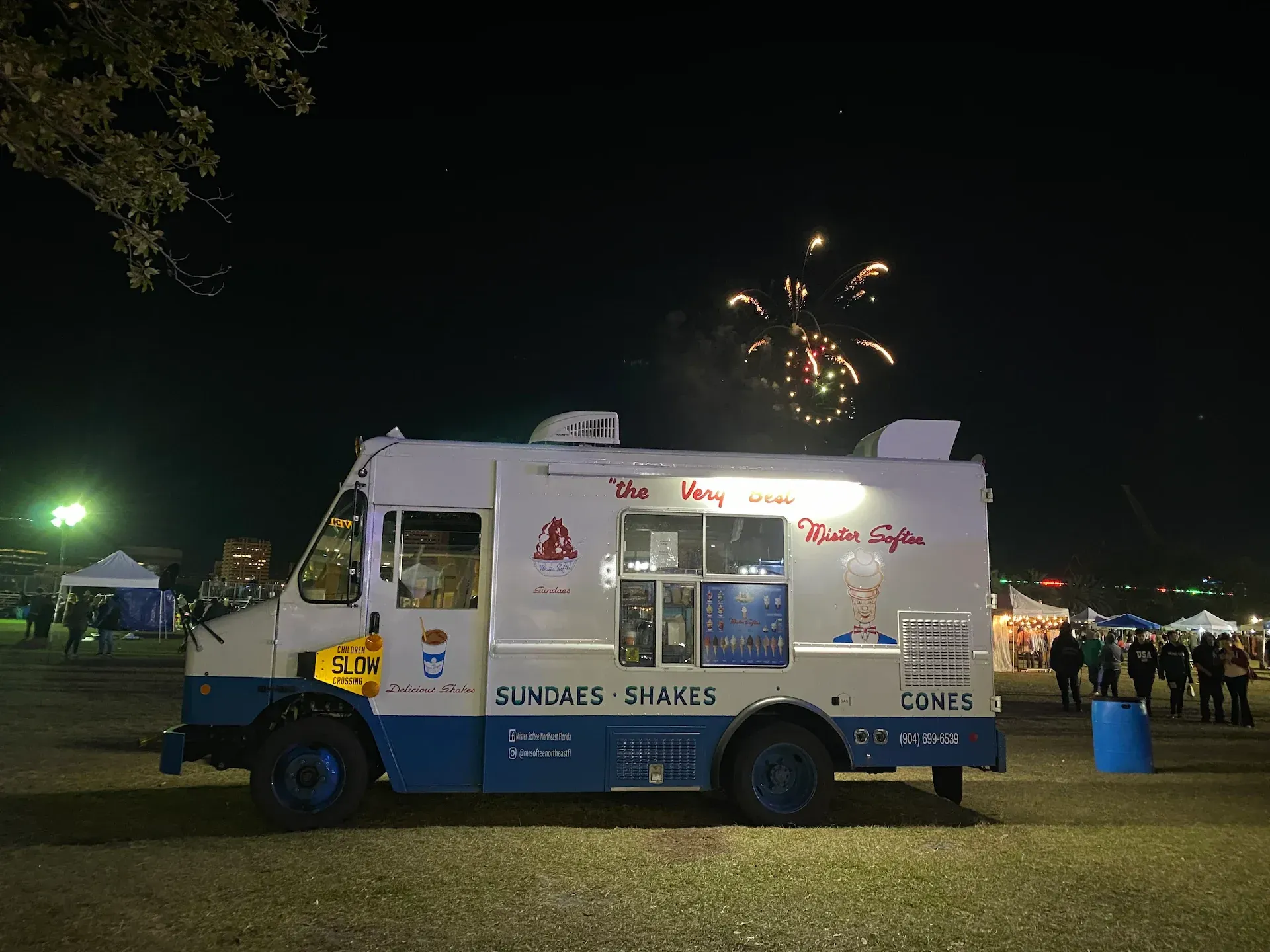
By understanding these technical limitations, we ensure that every Mister Softee experience is fast and friendly. We don't just bring the truck; we bring the capacity to handle your crowd without the wait.
Operational Efficiency for Rapid Dispensing
Finally, the human element cannot be ignored. The "portions per hour" rating assumes an efficient operator. To maximize your machine's potential, organize your workspace to minimize movement. Keep cones, spoons, and napkins within arm's reach of the dispense handle. Train staff on the "perfect pull"—a steady, controlled motion that prevents air pockets and ensures the cylinder isn't emptied faster than the pump can replenish it.
Summary of Soft Serve Capacity
To maximize the output of a commercial soft serve machine, you must balance equipment specs with environmental conditions and operational pacing. A high-quality machine is a significant investment, but its ability to produce 300+ portions per hour ensures you can capitalize on peak demand without losing sales to long wait times.
Key Takeaways:
- Machine Tier Matters: Choose low (150/hr), medium (250/hr), or high (400+/hr) volume based on your needs.
- Pump vs. Gravity: Use pressurized pump machines for the highest volume and most consistent texture.
- Manage Recovery: Pace your serving rate to allow the machine to freeze incoming mix.
- Environment is Key: Keep the machine cool and the mix cold to maintain manufacturer-rated speeds.
- Maintenance: Clean filters and check seals regularly to prevent performance drops.
Ready to see a high-volume operation in action? Contact us today to book the best ice cream truck experience for your next event in Northeast Florida!
FAQS
How many servings can one machine produce per hour?
Output depends on the machine class and serving size, but the practical limit is set by refreeze rate — the machine can only rebuild frozen product so fast between servings.
Does serving in a cone versus a cup change output?
Yes. Larger cup portions draw more product per pull, which lowers the total servings per hour compared to standard cones.
How many machines do I need for 300 guests?
For a large crowd served in a short window, a second machine or a second serving point is usually the difference between a moving line and a long wait.
What is refreeze time and why does it matter?
Refreeze is the interval the machine needs to bring fresh mix down to serving consistency. Continuous heavy dispensing outpaces it, and product quality drops until the machine catches up.
How can I speed up the serving line?
Pre-portion toppings, keep cones stacked and ready, station a second person handing off finished servings, and stagger the crowd rather than opening service to everyone at once.
Recent Posts