Countertop vs. Floor Soft Serve Machines: (2026 Guide)
Choosing between countertop and floor-standing soft serve machines depends on available floor space and peak demand volume. Countertop models save valuable floor space for low-to-medium volume needs, while floor-standing units offer significantly higher production capacity and internal storage for busy venues, large events, and high-traffic commercial locations.
What is the main difference between countertop and floor soft serve machines?
The primary distinction lies in the "footprint" and the internal refrigeration capacity. Countertop soft serve machines are compact units designed to sit atop existing work surfaces, making them ideal for small cafes, kiosks, or snack bars where floor space is at a premium. These units typically feature smaller hoppers and freezing cylinders, meaning they are best suited for steady, moderate service rather than intense bursts of high-volume demand.
In contrast, floor-standing models are self-contained, upright units that occupy their own dedicated floor space. Because they are larger, they can house more powerful compressors and larger motors. This extra power translates to faster recovery times—the time it takes for the machine to refreeze the mix after a serving—and the ability to produce dozens more servings per hour. For businesses in Northeast Florida that experience heavy summer crowds, the floor model is often the standard for reliability.
Key differences include:
- Physical dimensions and weight distribution
- Total hourly production capacity (measured in gallons or servings)
- Number of flavors (single vs. twin-twist capabilities)
- Power requirements (110V vs. 220V/240V systems)
- Internal storage volume for liquid mix
Understanding these differences is the first step in ensuring your venue can keep up with customer cravings without overinvesting in equipment that doesn't fit your layout.
Countertop Models: Benefits for Limited Spaces
For many venues, the countertop machine is the entry point into the world of soft serve. These machines are engineered to provide the same creamy texture as their larger counterparts but within a chassis that might only be 15 to 22 inches wide. If your kitchen layout is already crowded with fryers, grills, and prep stations, adding a countertop unit allows you to expand your Menu without a major renovation.
One of the biggest advantages is mobility. While these machines are heavy (often exceeding 150 pounds), they are far easier to relocate than a floor model if you decide to reorganize your service area. They are also popular for mobile catering setups where space inside a trailer or truck is limited. Many smaller establishments find that a countertop unit is more than sufficient for adding a dessert option to an existing lunch or dinner service.
How much ice cream can a countertop machine produce per hour?
Production capacity is the most critical metric for any venue manager. A standard countertop unit can generally produce between 2 to 7 gallons of soft serve per hour. In real-world terms, this equates to roughly 80 to 200 small cones or cups. While this sounds like a lot, it is important to consider "draw time." If a large group of 20 people arrives all at once, a smaller countertop unit might need a few minutes to recover after the 15th serving to ensure the consistency remains firm and cold.
If your venue hosts birthday parties or small corporate gatherings, this capacity is usually perfect. However, if you are looking at Catering for large stadium events or music festivals in Jacksonville, you might find a single countertop unit struggling to keep up with the heat and the pace. In these high-intensity scenarios, the liquid mix in the hopper can warm up faster than the machine can freeze it if the draw rate is too high.
Floor-Standing Units: Engineered for High-Volume Demands
Floor-standing soft serve machines are the workhorses of the industry. These units are designed for continuous operation in high-ambient-temperature environments. They often feature larger freezing cylinders—the area where the mix is actually turned into ice cream—which allows them to handle a much higher "overrun" (the amount of air whipped into the ice cream) and maintain a consistent temperature even during back-to-back servings.
These machines are typically available in twin-twist configurations, allowing you to serve two separate flavors plus a combined swirl. Because the base of the machine is large, it often houses the heavy-duty electrical components and ventilation systems needed to move heat away from the refrigeration lines efficiently. This makes them significantly more durable for long-term, daily use in high-traffic locations.
Advantages of floor models include:
- High-output compressors for rapid recovery
- Larger mix hoppers (often 20+ quarts per side)
- Available in air-cooled or water-cooled configurations
- Heavy-duty casters for easier cleaning behind the unit
- Advanced digital controls for precise consistency management
Which machine type is better for outdoor venue catering?
Outdoor catering in the Northeast Florida heat presents a unique challenge for refrigeration equipment. Floor-standing machines are generally better suited for outdoor environments because they often have more robust cooling systems. An air-cooled floor model requires significant clearance for airflow, but its larger fans are better equipped to handle 90-degree days than the smaller fans found in compact countertop units.
When we provide St. Augustine & St. Johns County services, we rely on heavy-duty equipment because the humidity and heat can tax smaller machines. A countertop unit used outdoors may struggle to keep the ice cream from becoming "soupy" if it is placed in direct sunlight or in a poorly ventilated corner. If your venue has a dedicated outdoor bar or patio, a floor-standing unit with a water-cooled system—which uses a water line to pull heat away—can be an incredibly efficient choice, though it requires specialized plumbing.
Essential Space Planning for Soft Serve Equipment
Before purchasing or leasing any soft serve machines , you must conduct a thorough site survey. Space planning isn't just about the width and depth of the machine; it’s about "breathing room." Most air-cooled machines require at least 6 to 12 inches of clearance on all sides to allow hot air to escape. If you tuck a countertop machine into a tight corner between a refrigerator and a wall, it will overheat, leading to mechanical failure and soft ice cream.
For floor-standing units, you must also consider the "swing space" for cleaning. These machines need to be pulled out regularly so that the floor underneath and the walls behind can be sanitized. Ensuring you have heavy-duty casters and flexible power cords is essential for this routine maintenance. Additionally, consider the proximity to your sink; soft serve machines require frequent cleaning (sometimes daily, depending on local health codes), so having a water source nearby is a major operational advantage.
What are the electrical requirements for a commercial soft serve machine?
This is where many venue owners run into unexpected costs. Most small countertop units can run on a standard 110V/15-20 amp circuit, which is common in most kitchens. However, larger, high-capacity countertop units and almost all floor-standing models require 208-230V single-phase or even three-phase power.
Before the machine arrives, you may need an electrician to install a dedicated circuit. Soft serve machines have high "startup" currents when the compressor kicks in. If the machine is sharing a circuit with a toaster or a blender, you will likely trip the breaker constantly.
- Countertop: Often 110V-120V (Standard Plug)
- Mid-Range: 208V-230V (Dedicated Circuit)
- High-Volume Floor Models: 208V-230V (Often 30 Amp+)
- Water-Cooled Units: Require dedicated water supply and drain lines
Cleaning and Sanitation: Is one model easier to manage?
Regardless of the size, sanitation is the most time-consuming part of owning a soft serve machine. You are dealing with dairy products, which means bacteria growth is a constant risk. Most machines must be fully disassembled, sanitized, and reassembled every few days.
Countertop machines have fewer parts to clean simply because they are smaller, but the process is identical to the floor models. Some modern floor-standing units offer a "heat treatment" cycle. This feature heats the mix to a pasteurizing temperature every night, killing bacteria and allowing you to go up to two weeks between full teardown cleanings. This feature is rarely found on countertop models due to the size of the components required to manage the heating and cooling cycles. If labor costs are a concern for your venue, investing in a floor model with a heat treatment system can save dozens of hours of labor each month.
Making the Final Choice for Your Northeast Florida Venue
To make the right decision, you must balance your current volume with your future growth. If you are just testing the waters with a new dessert program, a countertop unit is a low-risk, high-reward investment. However, if your venue is a primary destination for families and large groups, like the many popular spots in Jacksonville & Duval County , a floor-standing machine is almost always the better long-term choice.
Consider the following checklist before deciding:
- Peak Demand: How many people will you serve in a 15-minute window?
- Available Power: Do you have a 220V outlet, or are you limited to 110V?
- Floor vs. Counter Space: Which is more valuable in your current layout?
- Labor: Who will clean the machine, and how much time do they have?
- Budget: Can you afford the higher upfront cost of a floor model for lower long-term labor costs?
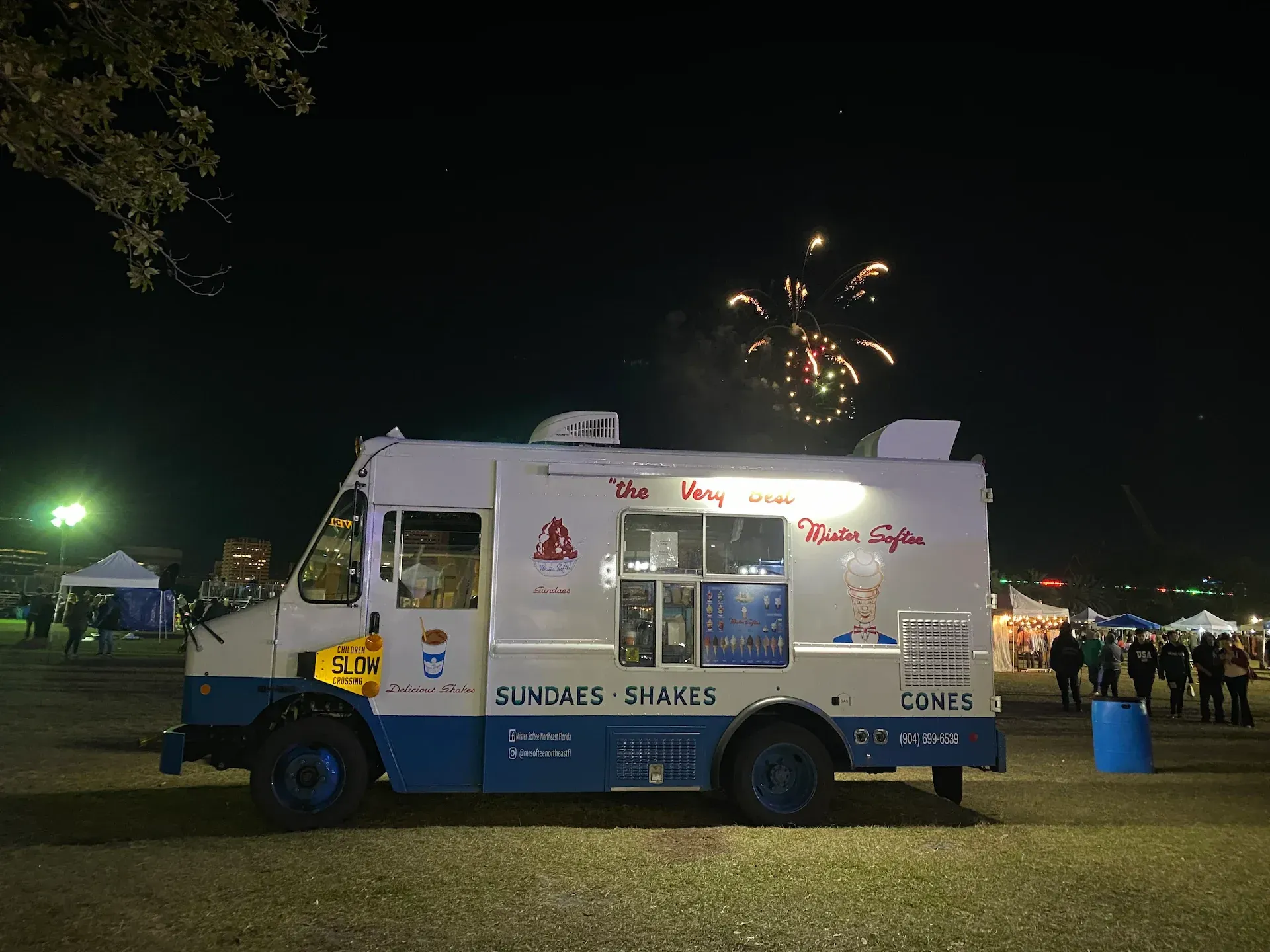
At Mister Softee Northeast Florida, we understand that providing the perfect soft serve experience requires the right equipment and the right expertise. Whether you are looking for Truck Info to see how our mobile units operate or you need advice on how to bring soft serve to your next corporate event, we are here to help. The smooth, creamy texture that our customers love is the result of high-quality machines kept in peak condition.
Summary and Key Takeaways
In summary, the choice between countertop and floor-standing soft serve machines comes down to a trade-off between space and power. Countertop units are excellent for venues with limited square footage and moderate demand, offering flexibility and ease of placement. Floor-standing machines are essential for high-volume operations where speed, recovery time, and flavor variety are paramount.
- Choose countertop for: Small cafes, low-volume dessert menus, and limited budgets.
- Choose floor-standing for: Dedicated ice cream shops, high-traffic venues, and locations where labor-saving heat treatment is needed.
- Always check your electrical and ventilation capacity before purchase.
FAQS
What's the main difference between countertop and floor models?
Size and capacity. Countertop units are compact and portable with smaller hoppers, while floor models hold more mix and sustain higher output over long service periods.
Which is better for a small event?
A countertop machine. For a short event with a modest guest count, the smaller footprint and simpler power needs outweigh the extra capacity of a floor unit.
What does a countertop machine need from the table it sits on?
A sturdy, level surface that can carry the unit's full weight with a loaded hopper, plus clearance around the vents for airflow.
How does output compare between the two?
Floor models generally sustain higher continuous output and recover faster under heavy demand, which matters most during a concentrated serving rush.
Which makes more sense for a permanent location?
A floor model, in most cases. Larger hopper capacity means fewer refills and less downtime across a full operating day.
Recent Posts